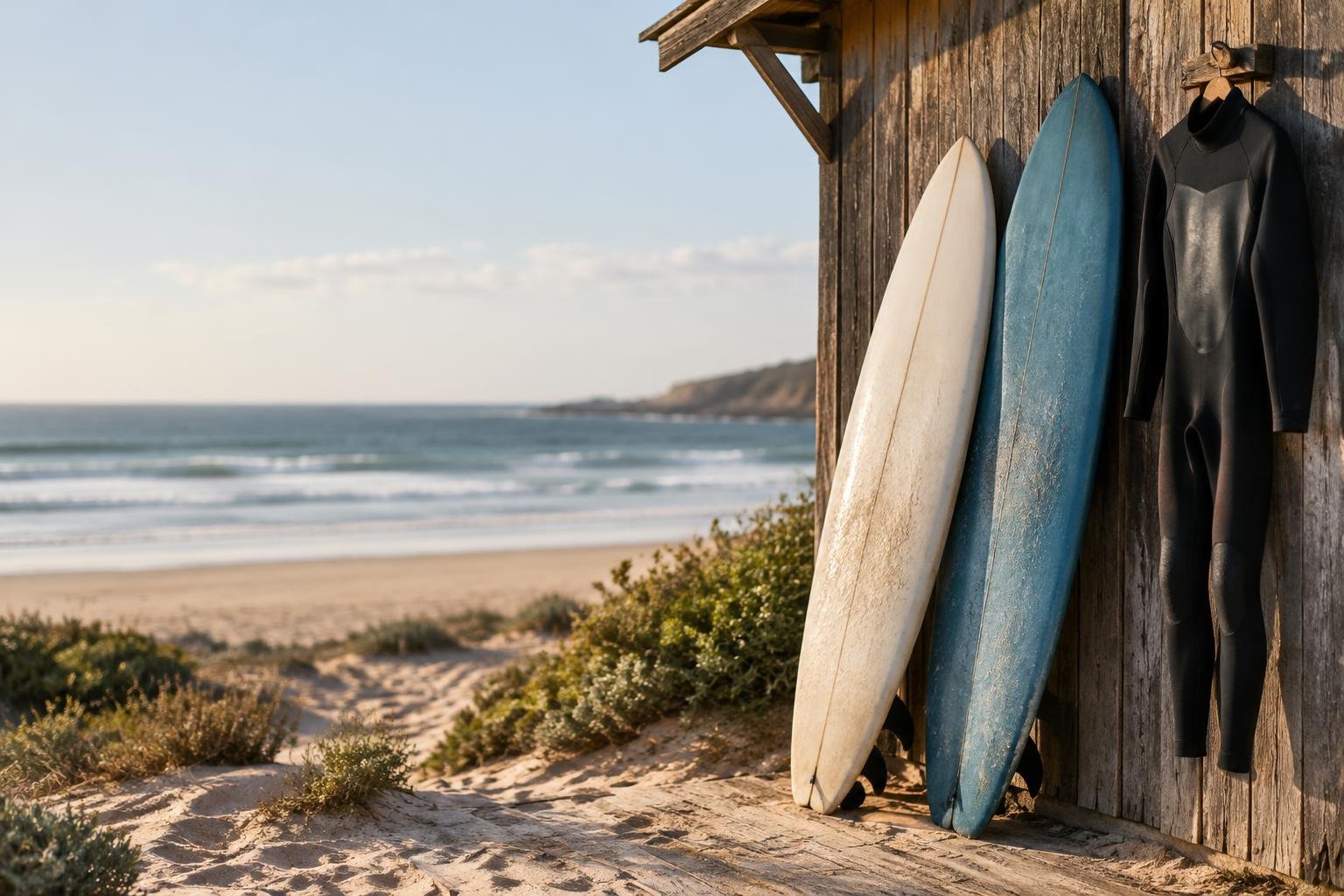
Picking a surfboard starts with the kind of waves you ride most and how you like to move on them. Each shape trades one quality for another, and no board does everything. Knowing the trade-offs saves you from buying something that looks great and frustrates you.
It helps to think of a board as a set of dials rather than a single choice. Length, width, thickness, outline and tail all change how it behaves. Turn one dial up and another usually goes down. Paddle power rises as a board gets bigger, while quick turning tends to fade. Every shape below is a different mix.
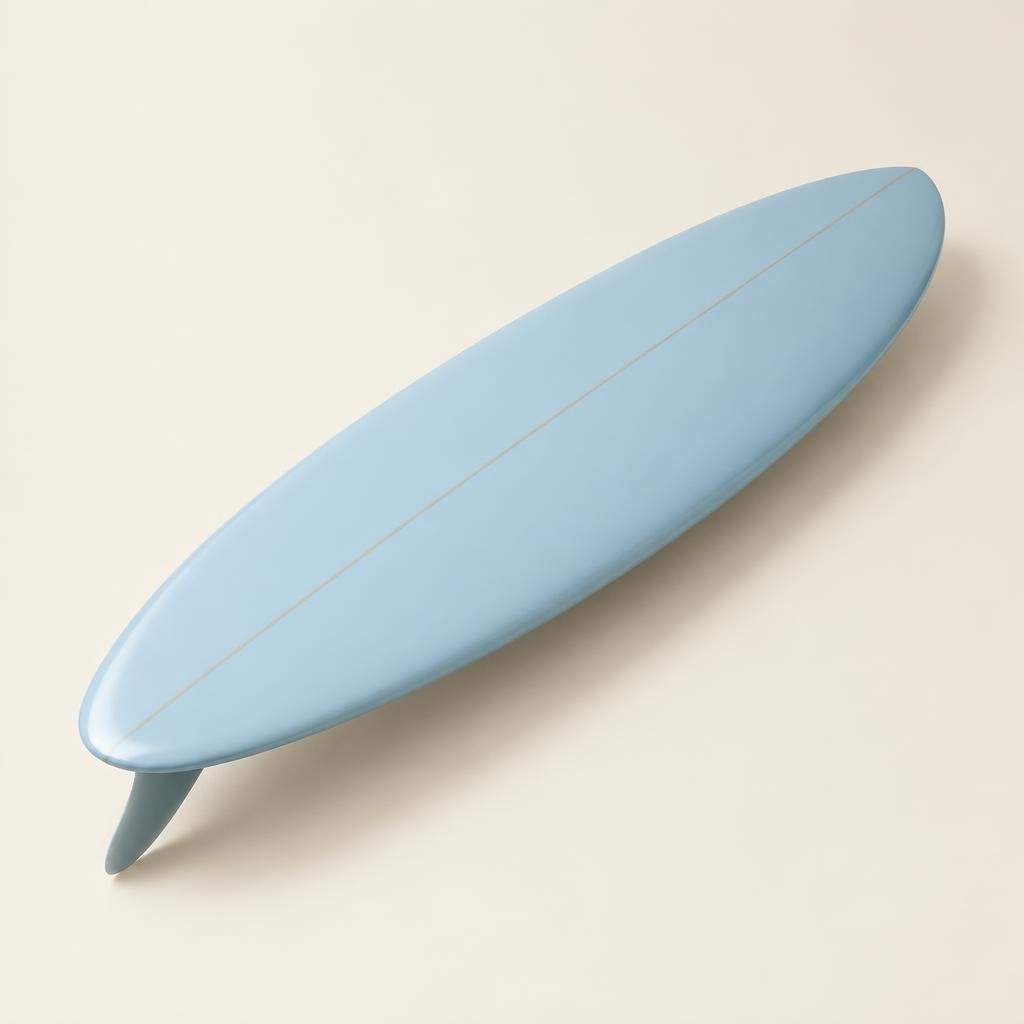
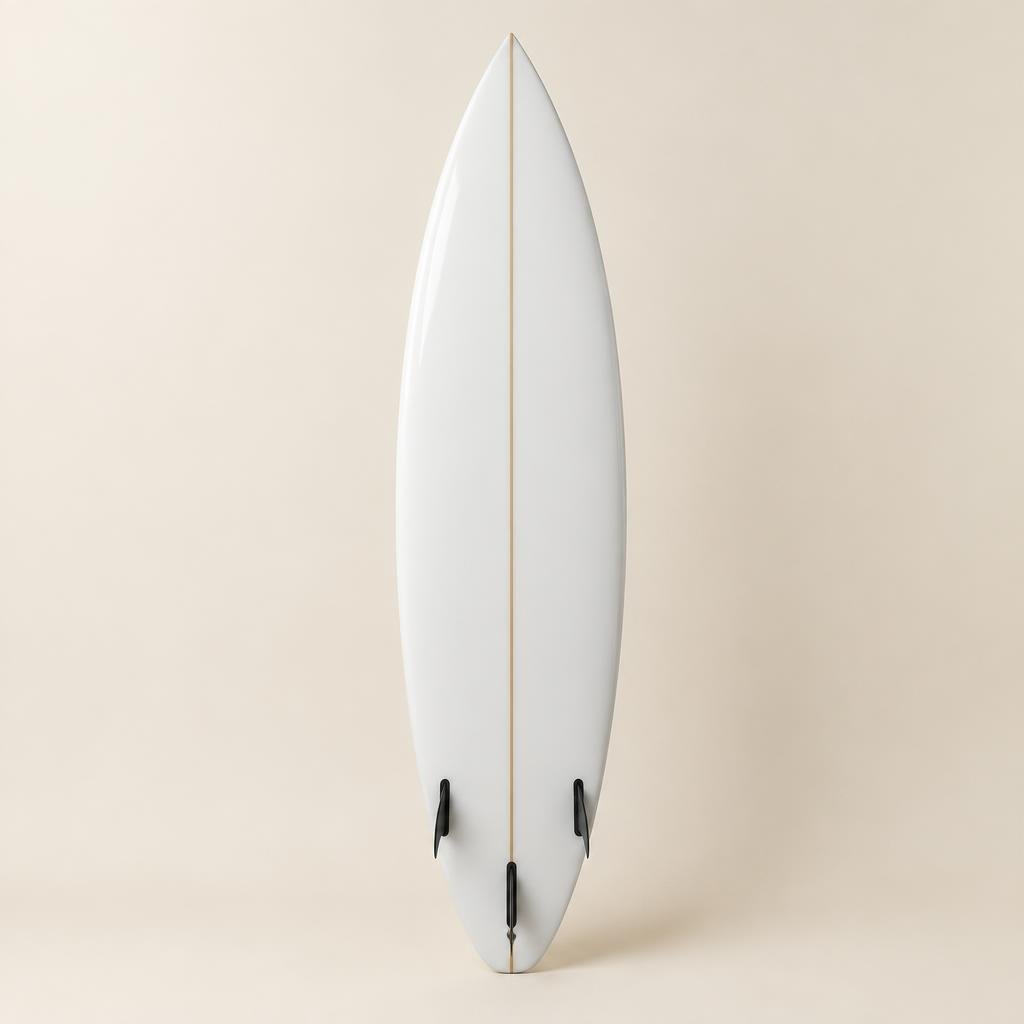
A shortboard is built for quick turns and steep, powerful waves. It has less volume, so it sinks more under you and asks for good paddling and timing. In small, soft surf it can feel hard to get going. Surfers who like sharp, vertical surfing tend to love it.
The thin, narrow shape is the reason it responds so fast. Less board sits in the water, so there is less drag and less resistance when you push into a turn. The cost is stability. Standing up takes more precision, and a missed paddle on a slow wave can mean sitting out the whole ride.
Wider Boards for Weaker Waves
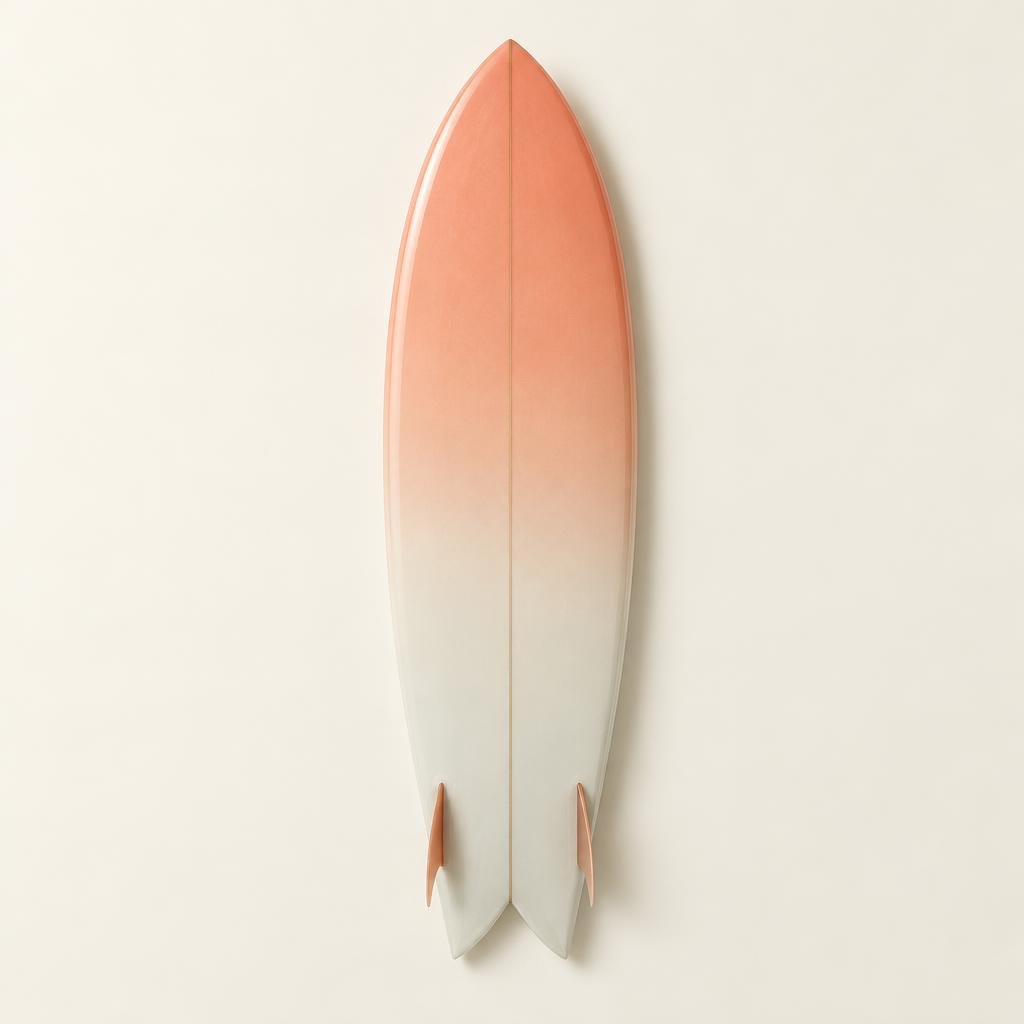
A fish is shorter and wider, often with two fins and a swallowtail. The extra width helps it paddle and glide through weaker waves. It feels lively and loose rather than hold-it-in tight. Many surfers keep one for days when the surf is small.
The width carries volume through the middle of the board, so it floats you easily even though it is short. That is why a fish can feel so different from a shortboard of the same length. A common mistake is expecting it to hold in a steep, hollow wave. It prefers speed and flow over hard, vertical turns.
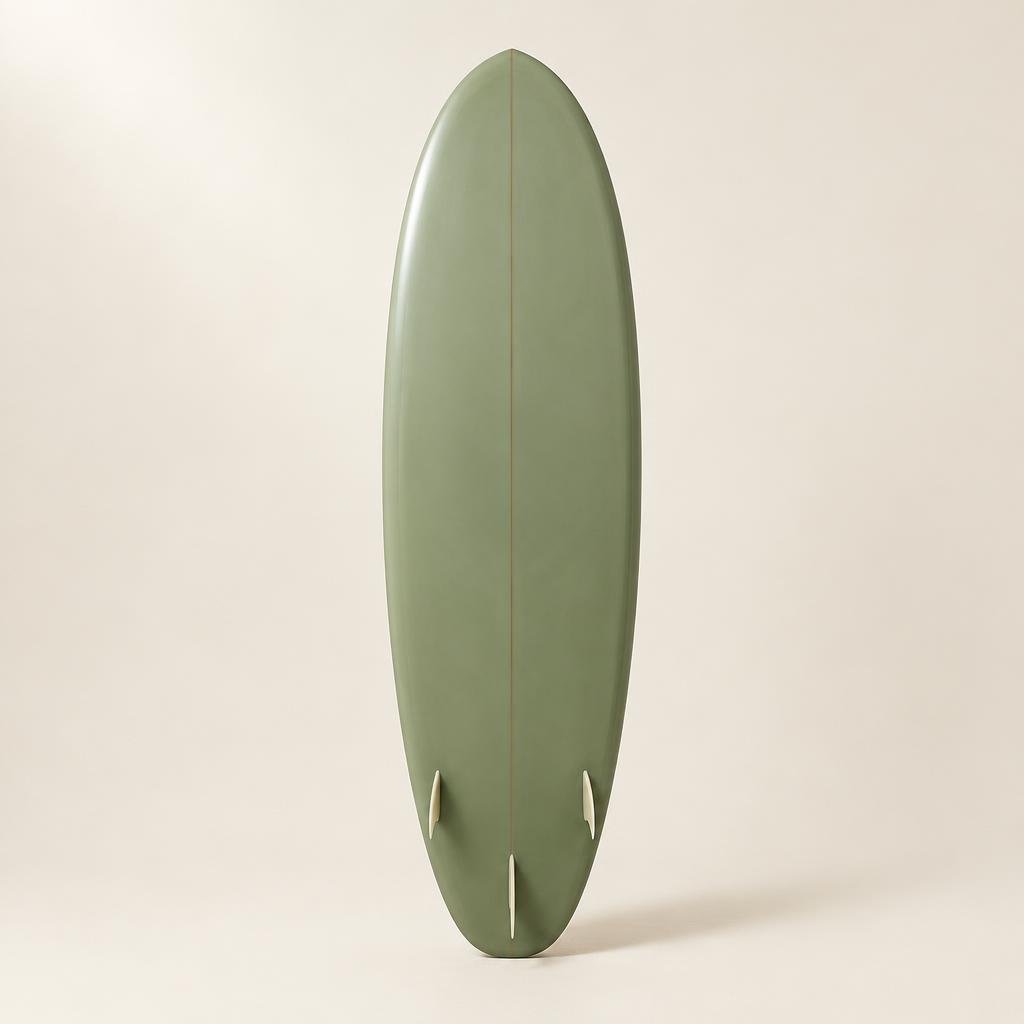
An egg sits between the fish and the longer boards. It has a rounded outline and more volume through the middle, which makes it stable and forgiving. It catches waves early and turns with a smooth, rounded arc. It suits people who want an easy ride without going all the way to a longboard.
The rounded shape also softens the feel of the board under your feet. There are fewer sharp edges to catch in the water, so small mistakes are easier to recover from. Some surfers find an egg a little unexciting at first. Give it time, because its smooth, drawn-out lines reward patience and good rhythm.
Middle Ground and Classic Glide
A mid-length is a good step for someone moving up from a foam board or down from a longboard. It gives you paddle power and a calm feel, but still turns reasonably well. Many surfers find it the most flexible single board for mixed conditions.
That flexibility is its real strength. On a day when the waves change through the session, a mid-length keeps working. It will not out-turn a shortboard or out-glide a longboard, but it rarely leaves you stuck. If you can only own one board, this is often where people end up.
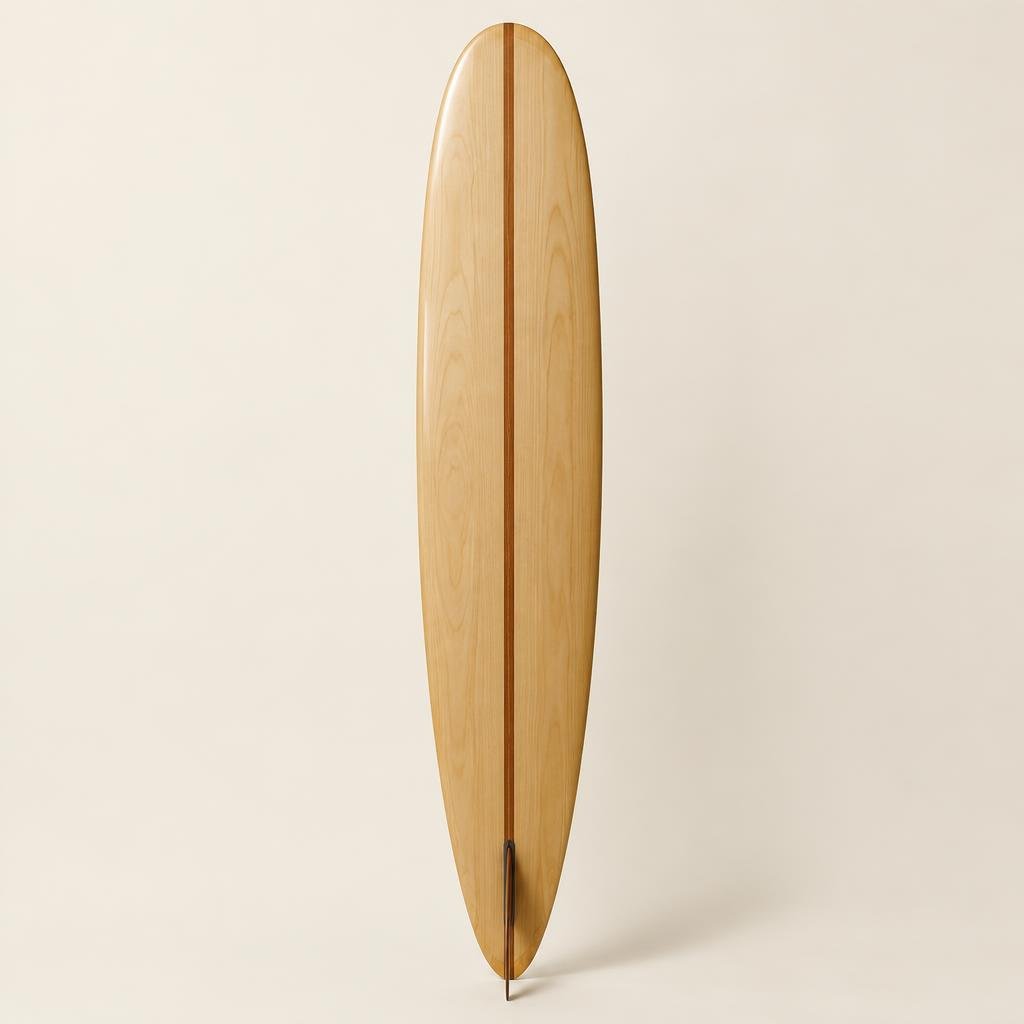
A longboard is the classic glider. Its length catches waves very early, and its rounded nose lets you walk to the front and trim along the face. It is slower to turn, but wonderful for small, clean waves. A single fin adds to that smooth, drawn-out feel.
The length gives you plenty of room to move your feet, which is what makes noseriding possible. It also means more board to carry, steer and control, especially when the surf gets bigger or crowded. Learning to turn it takes a shift in thinking, using your back foot and the whole length of the rail.
Matching a Board to You
When you choose, think honestly about your ability and your usual surf rather than the surfer you want to be. A board that matches your waves will teach you faster. Volume matters more than most beginners expect.
Volume is simply how much space the board takes up, and it decides how well the board floats you. More volume means easier paddling and earlier wave entry. Too little leaves you working hard just to catch anything. Many people buy a board that is too small because it looks sleek, then spend months struggling on it.
Fins and tail shape fine-tune the feel. More fins usually add grip and control, while a single fin feels freer and looser. A rounder tail gives a smoother turn, and a narrower, pointed tail holds better in steeper waves. These details matter, but they come after you have settled on the basic shape.
If you are unsure, lean toward more volume and more length. You can always go smaller later, and the extra waves you catch will make the learning quicker and more fun.