Most surfers think about the board first and the gear second, but a leash and a bag do a lot of quiet work. They protect the board, they protect other people in the water, and they make the whole routine easier. Here is what to look for in each, and why the small details matter more than they seem.
The leash joins your ankle to your board so that a wipeout does not send it away from you. This keeps the board close and keeps it out of other surfers' way. A loose board in a crowded lineup is a real nuisance, so a leash is basic courtesy as well as convenience.
Think about what a leash is really doing. Every time you fall, it takes a sudden pull from a board that is still moving, and that force runs through the cord, the swivels and the attachment point. Because the whole system takes repeated shocks, the parts are worth a look now and then, not only when something fails.
A bag works in a different way but with the same goal. It deals with the hours the board spends out of the water, which is more time than most people count. Between the car, the sand and the garage, a board meets plenty of knocks, and a good bag takes most of them so the board does not.
Details of the Ankle Cuff
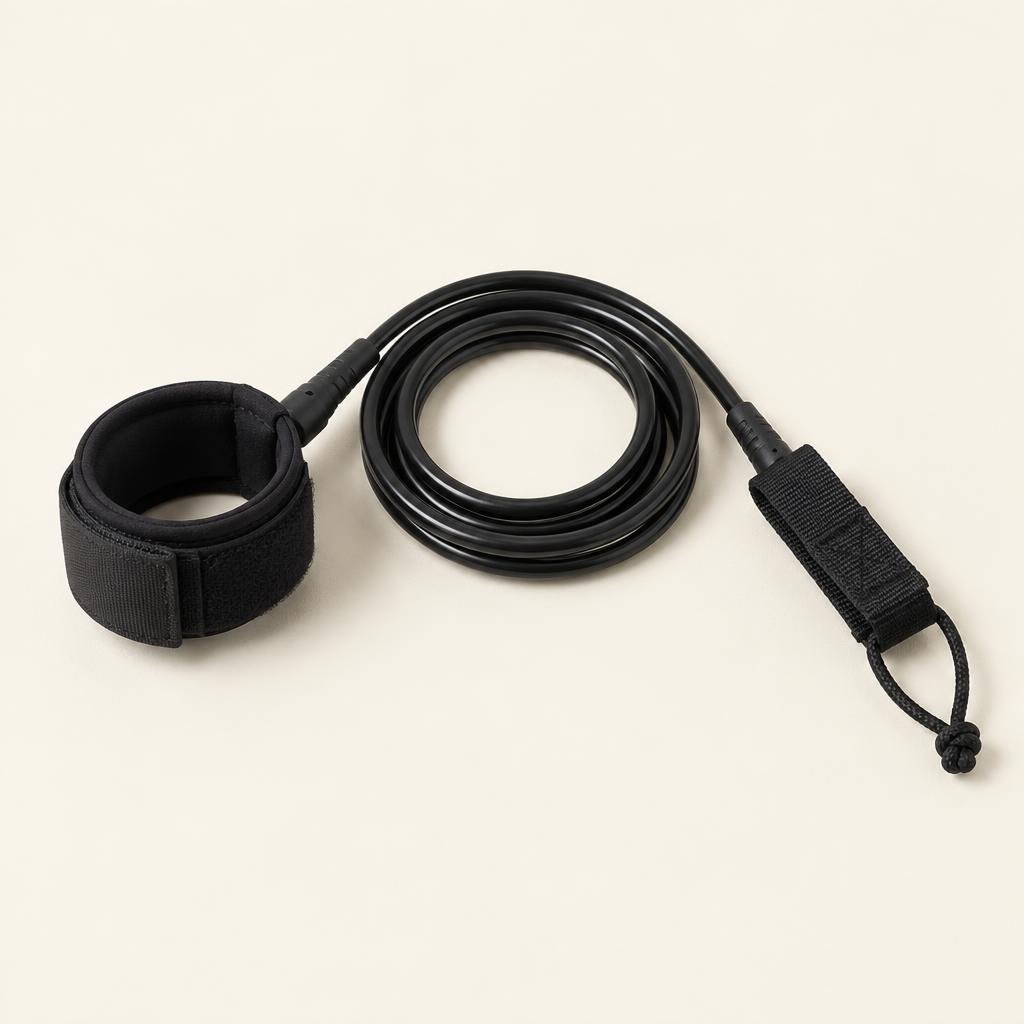
Look at the cuff on the ankle end. A padded neoprene cuff is more comfortable than a thin strap, especially for long sessions. The velcro should close firmly and lie flat against your ankle. A cuff that rubs will bother you more than you might expect, and that kind of irritation tends to pull your attention away from the waves.
Velcro does wear out. Sand and salt collect in the hooks, and over time the grip loosens. Rinsing the cuff after a session helps, and so does picking out any grit with your fingers. If the closure no longer holds firmly, it is time for a new leash, because a cuff that slips is not doing its job.
The other end attaches to the board, often with a rail-saver loop. This spreads the pull around the rail rather than concentrating it on one point. It is a small detail that is meant to reduce stress on the board. Check the cord and the loop regularly for wear, and look for fraying, kinks or thin spots in the string.
Cord thickness is a trade-off. A thicker cord is tougher and suits bigger, heavier surf, but it makes more drag in the water and can feel clumsy in small waves. A thinner cord is lighter and less intrusive, though it gives up some strength. Match the cord to the waves you actually ride, not the ones you hope to.
Getting the Length Right
Leash length is usually chosen to be about the length of your board. A leash that is too short can be awkward, while one that is too long may tangle or let the board swing too far. If you are between sizes, think about the kind of waves you surf, and how much room you like around you.
In small, soft waves, a slightly shorter leash can keep things tidy, with less cord trailing in the water. In bigger waves, many surfers like a little extra length so the board has room to travel in the whitewater without a hard snap. These are habits, not rules, and you can adjust them as you learn.
Tangles are a common mistake. Leaving the cord in a loose heap on the deck, or wrapping it around the board without care, sets up knots for the next session. Coil it loosely and keep the swivels free to turn, and the cord will lie straighter when you paddle out. Swivels only work if sand does not clog them.
Another thing to think about is how the cord is attached. Some surfers use a simple, snug knot on the rail-saver, and others pull a loop through. Whatever you choose, make sure it sits flat and is not pinched against the rail or the fin box. Look at it from time to time, since a worn string is easy to miss.
Bags, Rinsing and Storage
A padded board bag is the other half of the pair. It carries the board to the beach and cushions it in the car, and it keeps the sun off while you travel. A carry handle makes it easy to move around. Pick a bag that fits the board without squeezing it, and check that the zipper runs smoothly.
Padding comes in different thicknesses. A thin day bag is light and easy to carry and keeps off scratches and sun, while a thicker, more padded bag gives more protection against knocks, though it is bulkier. Think about how far you carry the board and how much it gets bumped, then choose the amount of padding that suits that.
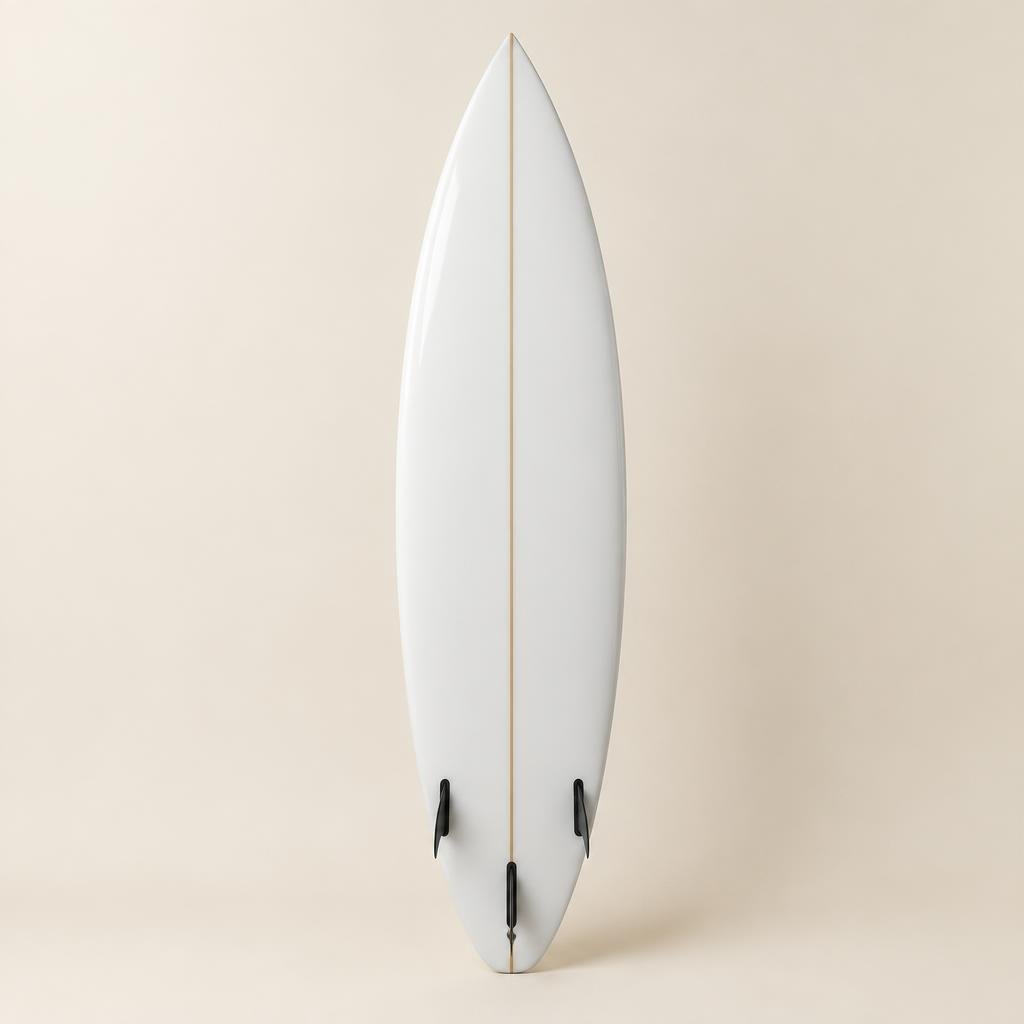
Fit matters a great deal. A bag that is too tight presses on the nose, tail and fins, while one that is far too big lets the board slide around inside. Check that the fins are either removed or sit comfortably in the space the bag has. It also helps to leave a little room for wax and a spare leash.
Before you pack, rinse and dry the board and the leash. Putting wet gear in a closed bag for days can leave it smelling bad. With a leash on your ankle and a bag at home, your board stays safe from the car to the water. Leave the bag open to air out between trips, and the gear will stay fresh.